President Donald Trump said Friday that Chinese President Xi Jinping appeared to favor calling artificial intelligence “super intelligence,” coming three days after Trump announced at the U.N. General Assembly that official U.S. government communications would adopt the term.
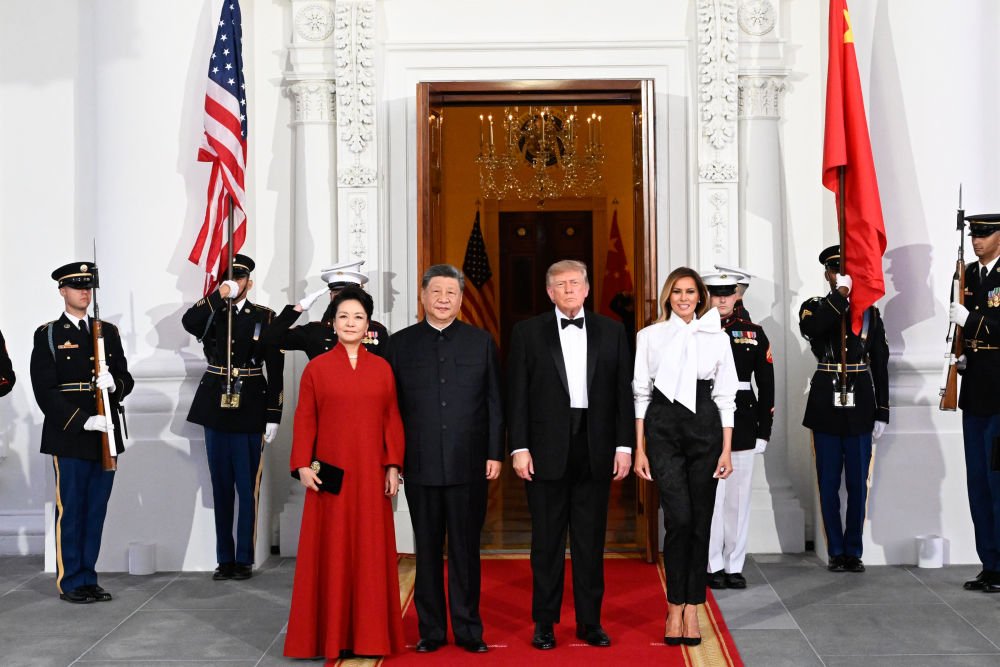
Writing on Truth Social following a White House meeting with Xi, Trump called the talks “very productive” and claimed the Chinese leader preferred “super intelligence” over what Trump described as the “poorly and inaccurately named Artificial Intelligence.” Publicly, however, Xi refrained from using the term, taking a more conventional stance by stating that both nations carry a responsibility to ensure AI is managed for good and kept under human control.
Trump’s shift in nomenclature follows his address Tuesday at the U.N. General Assembly, where he argued that the word “artificial” makes the technology sound “fake.” The rebranding stemmed from an informal poll Trump conducted on Truth Social days prior. Throughout his second term, Trump has repeatedly pushed for controversial name changes despite public pushback, including attempts to rename Lake Ontario “Lake America” during a trade dispute with Canada and adding his name to the Kennedy Center.
Following the president’s direction, the State Department instructed diplomats to replace “AI” with “SI” in speeches, documents, and press releases. According to internal emails reported by Reuters and The Associated Press, Assistant Secretary of State Michael Draeger mandated the terminology change across all official documentation, a directive already reflected in U.S. delegation statements at subsequent U.N. Security Council meetings.
Addressing concerns over unchecked technology growth, Trump firmly rejected calls for AI regulation, stating he would not “stfile growth of something that will be bigger than the Industrial Revolution.” Dismissing AI existential risks as a “hoax” and labeling advocates for safeguards “traitors,” Trump asserted that he is the only necessary “guardrail,” while adding that law enforcement agencies like the Department of Justice could intervene if necessary without imposing new regulatory frameworks.
The administration’s stance comes amid mounting national security concerns surrounding the technology. The debate follows the high-profile resignation of Anthropic researcher Jacob Coxon, who warned that AI could threaten humanity by the end of the decade, as well as a recent incident where a military report generated from erroneous AI data nearly prompted a U.S. strike on a Chinese vessel in the Middle East.
While the summit between Trump and Xi produced symbolic agreements to extend a trade truce and resume panda loans, the leaders made little tangible progress on core disputes, including AI technology transfers, intellectual property theft, and tensions over Taiwan and the South China Sea. Commenting on the summit, Chinese Ambassador to the U.S. Xie Feng posted on X that “the great national rejuvenation of China and making America great again are both ambitious and can surely be mutually reinforcing,” calling on both countries to explore a new approach to bilateral relations.