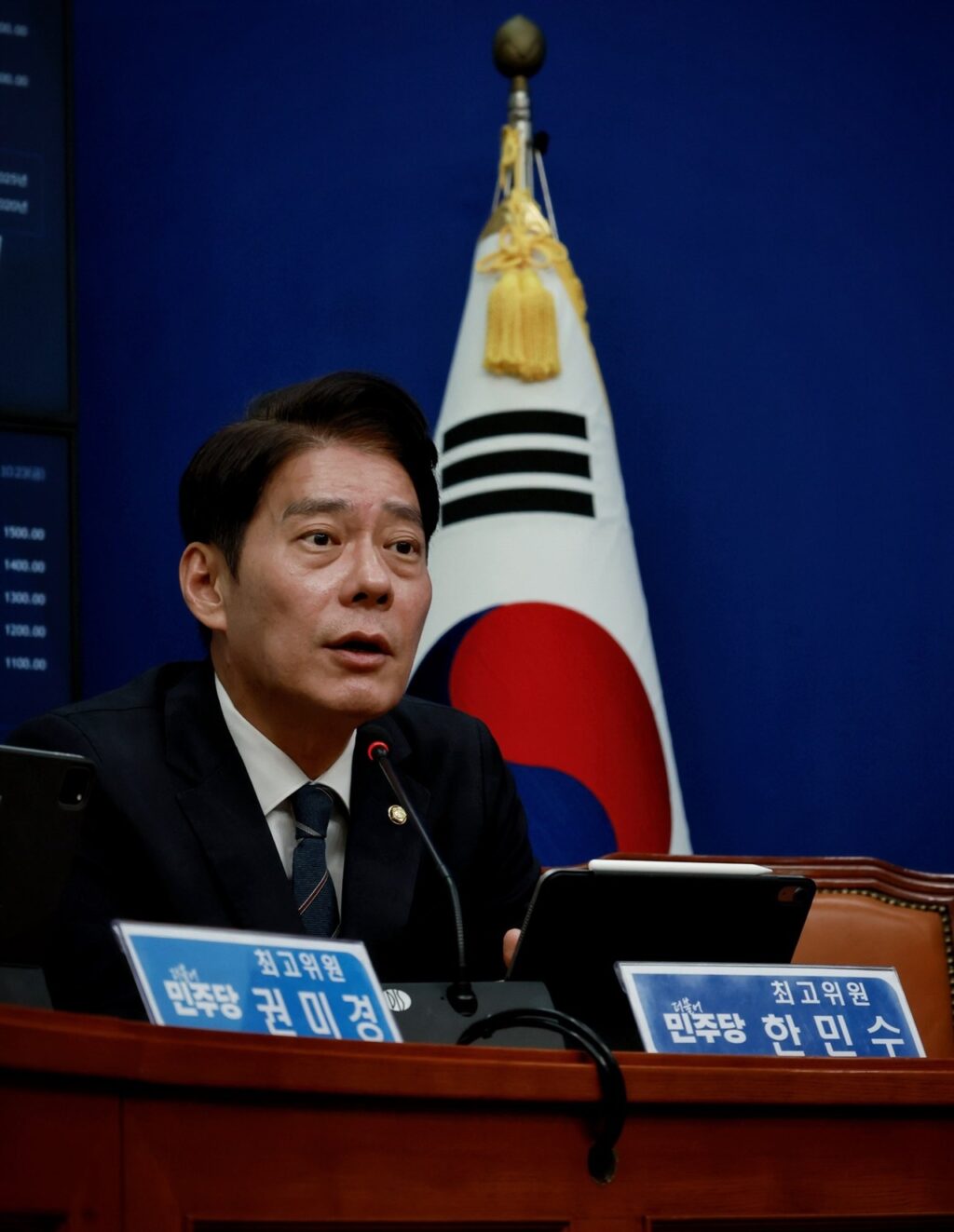
South Korea’s ruling Democratic Party is pressing for passage of a special counsel bill on what it calls fabricated prosecutions, pointing to courtroom testimony in the Daejang-dong development scandal and to material that surfaced during a spring parliamentary investigation.
Han Min-su, a Supreme Council member of the party, said in a post on X on Friday that the abolition of the prosecutors’ office had not erased its history of fabricated investigations and indictments. He said the bill should be handled swiftly once the National Assembly’s annual audit of government agencies ends. This year’s audit began Oct. 6, and most standing committees are due to finish their schedules Tuesday.
Han said evidence and testimony supporting allegations of distorted evidence and coerced statements emerged during the parliamentary investigation this spring. He said a recording of a phone call released in the Ssangbangwool North Korea remittance case captured a prosecutor demanding a confession that would make President Lee Jae-myung “the main culprit.” He also said a reporter’s name was entered in another person’s call transcript during the investigation involving the news outlet Newstapa, and that the prosecutor in charge told the investigation the entry was an error. The Associated Press has not independently verified these claims.
Han also described how the bill has been handled. He said the party, after introducing it, discussed dropping provisions related to cancelling indictments, and that it adjusted the timing of its handling so it could focus on the audit.
On Thursday, Democratic lawmaker Lee Geon-tae said on X that attorney Nam Wook testified at a Seoul High Court appeals hearing Oct. 20 for former lawmaker Kwak Sang-do and others that prosecutors demanded he give statements acknowledging that President Lee had given instructions. Asked who made the demand, Nam answered that “all the prosecutors in the special investigations unit” did, according to Lee. The lawmaker also said Nam told a trial last June that there had been no inducement or intimidation, but now says he “was too scared” to say so then. The post was published in the name of all Democratic Party members on the parliamentary special committee investigating alleged politically motivated prosecutions under the previous administration of Yoon Suk Yeol.
Claims of prosecutorial inducement are not new. In April, Kwak argued at a pretrial hearing in his appeal that Nam began reversing his statements around September and October 2022 because of prosecutorial pressure and in exchange for avoiding detention. Kwak’s side said the dates and places at which Nam and accountant Jung Young-hak say they handed over money keep changing, and requested that they be called as witnesses. The court said it would decide whether to accept the request at the first hearing on Sept. 1.
Kwak was indicted on charges of receiving 50 billion won (about $35 million) through his son. In the first trial, he was acquitted of bribery but convicted of violating the political funds law and fined 8 million won.
The special investigation committee ended its 42-day run on April 30. The same day, the Democratic Party introduced a special counsel bill, labeling the Daejang-dong and North Korea remittance cases as fabricated prosecutions. The original version included a provision on the power to cancel indictments that drew controversy. After Lee said at a news conference on Sept. 18 that the provisions on transferring and disposing of existing cases should be removed so the focus could be on uncovering the truth, the prospect of passage during the regular parliamentary session was raised. But at a caucus meeting Sept. 29, the party decided to hold off on putting the bill to a plenary vote Oct. 1 and to take it up after the audit.
The main opposition People Power Party opposes the bill. It adopted a resolution against it at a caucus meeting last month, and floor leader Chung Jum-sik said pushing for the cancellation of indictments would lead to calls for the government’s resignation and vowed to block it. During the parliamentary investigation, lawmaker Yun Sang-hyun criticized the Democratic Party for failing to prove prosecutorial inducement or fabricated cases. Some within the Democratic Party have also urged caution. Kim Han-kyu, the party’s deputy floor policy chief, has said it would be difficult to pass legislation that lacks broad public support.